Hydrating “gummy” ice bears

This time of year so many of us seem to be catching it all! Besides the COVID variants going around this winter there is also flu, RSV, rhinovirus, parainfluenza, Norovirus, croup and Strep just to name a few ugh. If your kids are like mine, their appetites plummet when they are sick. Typically they only want to eat goldfish, crackers toast, ice pops and drink cold and warm water. All my nutrition rules go out the window and my goal is to hydrate and give something solid prior to medication administration. Over the years I have realized the more volume you give can sometimes make it worse. Drinking large amounts of liquids is the main way to hydrate however sometimes if your child accepts too much volume it can trigger the dreaded vomiting depending on the virus they picked up. So small sips of liquid is best over time which is kinda hard for kids and adults! They typically accept one sip maybe two and move on. A trick I learned was that I can get more in with them chewing on ice pops (I use Chloe’s or Pedialyte). The taste of the pedialyte is not great so of course my kids are grabbing for the Chloe’s ice pop however it doesn’t provide the electrolytes they really need. These hydrating “gummy” ice bears thou do. All you need is a silicone mold and your choice of liquid. You can use watermelon juice, pedialyte, Coconut water or Gatorade. Simply pour the liquid into the mold and freeze. Pro-tip: Place the mold on a flat plate and put into freezer because the mold is flexible. These hydrating “gummy” ice bears can also be used as a morning treat in the summer time before camp or an outdoor outing to provide some extra pre-hydration. DS

Please note the above is the opinion of this writer and should not be replaced for medical care. Should you have concerns regarding dehydration during an illness please contact your physician. Tinyseedsfeeding was not compensated for this post.

First feeding!!!!

How exciting your child’s pediatrician finally recommends for you to start that very first feeding with your little one. Your first thought where’s the camera, where’s the videocamera, where’s daddy, where’s the grandparents and what am I going to give him/her. Depending on your child’s pediatrician, this can be anywhere from 3-6 months. A lot of pediatricians are advising parents to wait for reasons like allergies and immature gastrointestinal system but some old school docs start them early. For me, we started at 5 1/2 months.
Now what? You do what every new parent does, you look to your pediatrician and say “what do you recommend?” As you wait for this great response, your likely going to hear “start with some rice cereal mixed with formula or breast milk.” You think to yourself, “that doesn’t sound very appetizing”. Then your pediatrician adds and you can give Fruits and vegetables after the rice cereal is tolerated for 4 days. Then you want to introduce a single fruit or vegetable at a time for 3 to 4 days. You want to do this to make sure that there are no allergic reactions to the new food. Start with foods that are yellow or orange. Leave the greens for last and no citrus and tomato. Likely this is all the feeding advise your going to get. You won’t realize how many questions you are going to have until later. For now you just thinking wow this is great!
You run home and you get everything ready that brand-new shiny spoon, new plate and bowl. You heat up the rice cereal with the breast milk or formula perfectly and get daddy ready with the camera. Your little one may or may not accept that spoon and pretty much your guiding the spoon in and the cereal spills all over, which makes for great pictures and more laundry. No worries after practicing your little one should get the hang of it and gladly open his/her mouth. The movement of the tongue will eventually go from front to back instead of moving forward pushing the food out. If he/she needs a little help you can apply slight pressure onto the tongue with the spoon with one hand and use your other hand to make a “u” shape around the chin and cheeks. Just resist the temptation to squeeze those little cheeks! Good luck and bring on the baby food.

Check out http://www.healthychildren.org from the American Academy of Pediatrics for current guild lines and recommendations. http://www.healthychildren.org/English/ages-stages/baby/feeding-nutrition/pages/Switching-To-Solid-Foods.aspx

DS

The above is the opinion of this writer. This should not take the place of your pediatrician. You should always consult your pediatrician for medical advise regarding introduction of feedings and related issues.

What is a child feeding disorder and what should I look for?

Feeding, swallowing, sensory and behavior feeding disorders can affect a child’s ability to develop and thrive. Feeding disorders include problems accepting food and getting ready to suck, chew, or swallow it. Swallowing disorders, also called dysphagia, can occur at different stages of the swallowing process:

  • Oral Phase- sucking, chewing, and moving food or liquid from the mouth into the throat
  • Pharyngeal Phase- starting the swallow, squeezing food down the throat, and closing off the airway to prevent food or liquid from entering the airway (aspiration) or to prevent choking
  • Esophageal Phase- relaxing and tightening the openings at the upper and lower esophagus and squeezing food from the esophagus into the stomach http://www.asha.org/public/speech/swallowing/feedswallowchildren.htm

Sensory/behavioral feeding disorders

  • Oral Sensory impairments: Hypersensitivity over-registers, hyposensitivity under-registers or Mixed (hypo/hypersensitivity).
  • Stuffing, decreased oral awareness, loss of bolus, refusal, gagging, retching
  • Food refusal/limited food repertoire.
  • Texture/taste/temperature sensitivities
  • Impact of GI issues on feeding; most commonly seen with children that have or had a history of reflux, uncontrollable emesis and/or decreased tolerance of feedings.
  • Behavioral component will typically develop after a sensory impairment given mealtime difficulties.
  • Prolonged bottle/breast feeding

Common reasons for a comprehensive feeding and swallowing evaluation include:

  • Poor sucking
  • New onset of feeding difficulty
  • Difficult transitioning to age appropriate textures
  • Difficultly transitioning to age appropriate methods of intake (ie cup/spoon)
  • Limited food repertoire
  • Reduced volume of oral intake
  • Unexplained food refusal
  • Apnea during feeding
  • Gagging or coughing during feeding
  • Lengthy feedings or mealtimes (>30 minutes)
  • Wet/gurgly vocal quality after feedings/meals
  • Prolonged/multiple intubations
  • Oral-motor weakness
  • Vocal cord dysfunction
  • Failure to Thrive
  • Recurrent aspiration pneumonias
  • Diagnosis of a disorder typically associated with dysphagia (e.g. neurological diagnosis, syndromes etc.)

Snotty!

With Winter still in full swing your little one is likely to catch a cold. I just hate it when my little one is sick. She’s so miserable which makes feeding and sleeping difficult. I find myself up all day and night and on a newborn schedule. The relief I feel when I can finally get her content is priceless. The past few weeks we picked up a cold along our travels and he stayed (unwelcomed of course) for two weeks. I needed to come up with a feeding and sleeping plan because there was no way I could make it through. Feeding from the bottle became an issue as her tiny nose was so stuffed. She accepted small meals at a time but really she just wanted her “baba.” Newborns are obligatory nose breathers but we are way passed that stage. Drinking from a bottle requires the coordination of the suck/swallow/breathe cycle. Some newborns and infants have an uncoordinated suck/swallow/breathe cycle and need help during feedings to accept their minimum volume of intake. Some strategies that are used are pacing during feeding, supplemental oxygen or slowing down the liquid flow to improve the coordination. The above is recommended by a feeding specialist (Speech Pathologist or Occupational Therapist) following a comprehensive evaluation. When my little one was accepting the bottle this is exactly what was happening and I knew she wanted to take more but was losing her patience with having to keep pulling off the bottle to breathe. I used the following strategies which made her more comfortable and calm. If at any point your child has a significant change in breathing (pulling or change in color) or feeding (choking or coughing during feeding) contact your pediatrician immediately as these could be signs of a more serious illness.

Here was my feeding routine.

1. Ayr infant saline drops or little nosies to moisten and thin mucous in nares
2. Nasal suctioning with a nasal bulb syringe. The nasal bulb syringe really removes deep thick mucous and clears sinus’. If you are unsure how to use the nasal bulb syringe ask your pediatrician to demonstrate. It’s very easy and effective when completed properly. Alternatively you can also use Frieda baby nasal aspirator or electric nasal aspirator by Frieda baby.
3. Repeat saline drops to moisten nares after suctioning
4. Feed immediately with 8 ounce milk bottle (mixed with 2 ounces of water to thin milk out). Milk products increase mucous and congestion. If your little one is a healthy weight check with your pediatrician if you can do this for a few days. You can also utilize a non-dairy milk like Almond, oat or coconut for a few days if you child will accept it as non-dairy milk produce less mucous. Please clear by pediatrician if your not comfortable doing this yourself. If your child is underweight or has issues with accepting enough volume then I would not suggest switching milk type at this time.
5. Feed under cool mist humidifier. I love the Crane cool mist drop humidifier. It kept my daughter breathing much easier during feeding with less episodes of pulling off the bottle to take a breath. I would also remove the bottle when needed if she needed a break to breathe. I continued the humidifier at night and noticed that she was able to sleep longer as she was more comfortable.

Good luck! And happy Winter.

DS

The above is the opinion of this writer. This should not take the place of your pediatrician. You should always consult your pediatrician for medical advise regarding introduction of feedings and related issues. Tinyseedsfeeding was not compensated for this post.
20130308-143327.jpg

20130308-143515.jpg

High chairs

You better be ready with your high chair pick when your little one is ready to start solids. A high chair is super important to utilize in the beginning of solid feeding as it sets structure and is a pre-feeding cue to your child. A proper high chair should provide 90/90/90 posture. 90/90/90 posture is support at a 90 degree angle or flexion at the hips, knees and ankles. During seating position is important to maintain symmetry between left and right sides of the body via a neutral pelvis to avoid obliquity, rotation and posterior tilt of the pelvis. Padding for comfort is also important as each feeding is typically 30 minutes and occurs at a minimum of 3 times a day. Your little one will be spending lots of time in this chair over the course of a week-10 and a half hours at least! The height of the chair and tray are also important as it should pull up to the table so your little one is part of family meal time. Lastly, the design should fit with you home decor. My suggestion is to bring your child to the nearest baby store and test your top picks out.
I have chosen 3 chairs that are my favorite and meet the above criteria. Note! I am not a fan of chairs that tilt back as your child should never be tilted backward in a chair during feeding time.

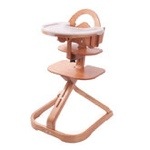
Signet complete high chair by Svan
Color options: Natural espresso cherry
This multi-stage baby high chair grows with your child, converting from a high chair to a booster seat to a toddler chair. Has a sleek, compact design while providing support and comfort. It’s adjustable seat and footrest offer optional positioning.

High chair $250
Cushion $50
Total cost: $300

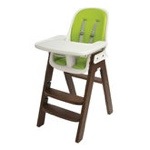
tot sprout high chair by OXO
Color options: Birch/orange, taupe/walnut, green/walnut, pink/walnut
The OXO Tot Sprout High Chair is a more traditional frame with a modern color flare. Designed to grow with your child from six months to five years. The foot rest and food tray are adjustable and can be removed when your little one is ready to eat at the family table. To switch up the look you can purchase an additional color cushion insert for a completely different look.

High chair $250
Total cost: $250

Tripp trapp high chair by Stokke
Color options: Black, red, blue, natural, walnut
Designed to be pulled right up to the table, the Tripp Trapp high chair lets you share family mealtime together from six months on through the early teen years. Has a very modern feel and can be used as a desk chair.

High chair $250
Baby seat $70
Tray $50
Cushion $45

Total cost: $415

DS
The above is the opinion of this writer. This should not take the place of your pediatrician. You should always consult your pediatrician for medical advise regarding introduction of feedings and related issues.

20130228-222233.jpg

20130228-222335.jpg

20130228-222617.jpg

Spit UP!

From time to time all babies spit up! Just one of the reasons why we have so much laundry. Some babies bring up a small amount of spit up during burping, some during positional changes (like diaper changing or transitioning into the crib) and some with no stimulation at all. The amount can be from teaspoon sized to the entire feeding. There is more of a concern when an infant spits up an entire feeding. Small amounts of spit up even during every feeding can be considered normal as long as the infant is gaining weight and it doesn’t contain any blood. However further investigation should be considered when an infant spits up a large volume after or during a feeding especially if it appears to be the entire feeding. An infant that spits up a large amount after each feeding should be evaluated by a gastroenterologist. You should first discuss this with you pediatrician however if your child is not gaining or losing weight insist on a specialist. Underlying GI issues could be present thus causing such emesis. Some examples could be GERD or reflux, pyloric stenosis or dysfunction, delayed gastric emptying or gastroparesis, allergies or esophageal narrowing.
The most common of cause however is GERD. Everyone has gastroesophageal reflux (GER), the backward movement (reflux) of gastric contents into the esophagus. Extraesophageal Reflux (EER) or Laryngopharyngeal Reflux (LPR) is the reflux of gastric contents from the stomach into the esophagus with further extension into the throat and larynx. A child or infant with EER or LPR is typically termed a silent refluxer in which they do not spit up. Instead they have a persistent cough and present with a hoarse cry or vocal quality.
The diseases associated with reflux are known collectively as Gastro-Esophageal Reflux Disease (GERD). GERD occurs when a valve known as the LES of the esophagus malfunctions. Normally, this muscle closes to keep acid in the stomach and out of the esophagus. The continuous entry of acid or refluxed materials into areas outside the stomach can result in significant injury to those areas.
While GER and EER/LPR in children often cause relatively few symptoms like heartburn or complain of a stomach ache. Symptoms in an infant can include crying/irritability, poor appetite/feeding and swallowing difficulties, failure to thrive/weight loss, regurgitation (“wet burps” or outright vomiting), stomach aches, abdominal/chest pain (heartburn), sore throat, hoarseness, apnea (stops breathing), asthma/wheezing, chronic cough and throat clearing, chronic sinusitis and ear infections/fluid. Effortless regurgitation is very suggestive of GER. However, persistent vomiting (which is not the same) does not necessarily mean a child has GER.
Some basic changes that could assist with spit ups during and after feedings could be- feeding position (use a more upright angle), keep the infant upright after meals and avoid inversion (like during a diaper change), burp frequently, feed slower (choose a slower nipple), feed more frequent in less volume rather then larger volume less frequently.

DS
The above is the opinion of this writer. This should not take the place of your pediatrician. You should always consult your pediatrician for medical advise regarding introduction of feedings and related issues.

20130219-162311.jpg

Got Milk?

Wow! A whole year went by and your thinking of weaning your LO to milk already. Some parents begin at 10 months, some at 12 months while others continue breast milk beyond the first year. Which ever your approach there are lots of choices on the market for when you are ready.
Most parents choose cows milk but there are so many options like goats, soy, almond, oat and rice milk. Even the formula companies make powdered toddler formula if you want to continue with a formula based product.
When I went to my local supermarket which happens to be whole foods I thought I was just going to pick up a carton of whole milk. When I got to the dairy section I realized I had some research to do. So here’s the scoop on milk options.

Type: Cows
Organic or not- Organic milk refers to a number of milk products from livestock raised to according to organic farming methods. In most jurisdictions, use of the term “organic” or equivalents like “bio” or “eco”, on any product is regulated by food authorities. In general these regulations stipulate that livestock must be: allowed to graze, be fed an organically certified fodder or compound.

Percent: Whole, 1%, 2%, skim- The amount of fat content per serving.

Grass-fed or not- means that the cows are fed only grass and graze. If its not grass-fed then the cows are fed fodder or a compound.

Homogenized and non-homogenized- Homogenized milk is any sort of milk that has been mechanically treated to ensure that it has a smooth, even consistency. The homogenization process typically involves high temperatures, agitation, and filtration, all aimed at breaking down milk’s naturally occurring fat molecules. Once broken, these molecules stay suspended in the milk and resist separation. The process makes fat filtration much easier for manufacturers, and lengthens milk’s shelf life. Some nutrition experts have argued that homogenization can lead to heart disease.

Pasteurization, ultra-pasteurization- the process of killing harmful bacteria. Ultra pasteurization is killing of harmful bacteria at extreme high temperatures which can give the milk a longer shelf life.

Omega-3 Milk- Added EPA, ALA and DHA. Made with milk from pastured cows, which has naturally-occurring ALA Omega-3 from pasture feeding

Lactose free- lactate added which converts lactose into glucose which is easily digested.

Raw milk- Milk that is not pasteurized or homogenized. Raw milk is ban in some states. Advocates of raw milk believe that this is the best way to accept milk and it nutritional benefits. They believe that the process of homogenization and pasteurization kills the healthy bacteria present in milk and argue that some cheeses that humans consume contain the same bacteria.

After all my research I decided on “Sky Top Farms” organic grass fed unhomogenized whole milk for my LO. Which will you chose the next time you head to the dairy aisle?

Ds

The above is the opinion of this writer. This should not take the place of your pediatrician. You should always consult your pediatrician for medical advise regarding introduction of feedings and related issues. Tinyseedsfeeding was not compensated for this post.
20130215-002754.jpg

Food safety and stomach viruses!

With stomach virus’s going around this time of year like norovirus and rotovirus the last thing you need to worry about is food poisoning as well. Both can take its toll on your little one leading to dehydration and weight loss. When a child that is a picky eater gets a stomach bug or food poisoning the lasting effects can be worse then a child without picky feeding behaviors. Your child may reject previous foods that were their favorites, the last thing they ate before vomiting or the only food they were able to eat while sick. It can take weeks sometimes months to return back to previous eating habits where a child without picky feeding behaviors will bounce back in a few days to a week. When your little one catches a nasty bug or food poisoning be sure to contact your pediatrician. Food poisoning is quite serious because it can lead to a high fever and rapid dehydration sometimes warranting the dreaded ER visit. A tip I learned after a few cases of food poisoning from eggs is to wash the shell with an antibacterial dish soap that kills salmonella before cracking the egg.

20130116-230333.jpg
The above is the opinion of this writer. This should not take the place of your pediatrician. You should always consult your pediatrician for medical advise regarding introduction of feedings and related issues. Tinyseedsfeeding was not compensated for this post.

After purée but before table food

I found that this stage of feeding to be the most confusing for parents because its hard to really pin point exactly what is safe in terms of texture and size of finger food for each individual child. There is room for interpretation. The rule of thumb is sitting unsupported, crawling (belly off of ground) and using a pincer grasp (picking up objects with you thumb and forefinger).
Purées are easy because you just pulverize the food until its completed smooth (no lumps and not to thick). It is quite easy with low margin for error. There is a much less risk of choking and parents find purée foods easy to prepare and stress free. Some parents follow more of a baby led weaning approach and completely skip purées and jump to finger foods and then table foods. I like a mixed approach. I see a lot of parents who get stuck in the purée rut and can’t seem to move past it. Then introduction of finger foods are then delayed (other then puffs and cereals) thus resulting in a delay of table foods. Whatever your approach you have to take your babies led when starting finger foods. You child should be crawling and definitely sitting with good head, neck and trunk support prior to starting solid and finger foods. If you are concerned about your child’s head/neck and trunk support which impacts sitting and crawling please consult your pediatrician as intervention may be needed to assist with these physical developments. It is too difficult for a infant to attempt to feed when impaired head/neck and trunk support as they will be unable to safely manage the food intake. This can place your child at a choking risk.
For the most part finger feeding should begin with small pieces of foods that can be mashed between the gums. Some examples would be cut-up banana, cut-up avocado, pouched/steamed cut-up peaches, pouched/steamed cut-up pears, pouched/steamed cut-up apples, pieces of soft pancake, pieces of soft breads, skinned cut-up blueberries, small pieces of cubed tofu, small pieces of a muffin, small pieces of soft cheeses like mozzarella and cheddar, small pieces of broccoli florets.
If your unsure about the size of pieces then start really small and work your way up as tolerated. Its recommended to stay away from small foods like rice, peas and grapes in the beginning of finger food introduction. It’s important to remember to introduce each food individually for allergy concerns.
Ideally you want to have your LO pick up these small pieces and place them into his/her mouth. In the beginning he/she will need a little guidance and miss a lot but with practice he/she will be eating these pieces faster then you can place them on his/her feeding tray. If at any point your concerned about choking -stop and consult your pediatrician. This stage of feeding is risky because your child is learning how to chew and manage textures and solids. It’s very important for parents and caregivers to have training in choking and CPR of an infant because of these risks.

Check out some infant choking and CPR classes at the American Red Cross. http://www.redcross.org/

Some beginning finger foods. Banana, baby pancake, blueberries and cottage cheese with cherry sauce. Break-up soft solids into small mashable pieces and peel blueberries. Your LO is sure to enjoy! Some beginning finger foods. Banana, baby pancake, blueberries and cottage cheese with cherry sauce. Break-up soft solids into small mashable pieces and peel blueberries. Your LO is sure to enjoy!

DS

The above is the opinion of this writer. This should not take the place of your pediatrician. You should always consult your pediatrician for medical advise regarding introduction of feedings and related issues. Tinyseedsfeeding was not compensated for this post.

Does my child need a feeding/swallowing evaluation

The first thing I would like to mention is that if you are reading this post please know that you are not alone. Up to 50% of infants and children can present with a feeding/swallowing disorder; about 3-12% turn into a severe impairment. Feeding and or swallowing impairments can be present from birth, have an acute on-set or develop over time. The etiology of the impairment will determine the development and play a key factor in treatment.I LOVE TO EAT!!

Some red flags warranting a feeding and or swallowing evaluation would be:

  • Poor sucking
  • New onset of feeding difficulty
  • Difficult transitioning to age appropriate textures
  • Difficultly transitioning to age appropriate methods of intake (ie cup/spoon)
  • Limited food repertoire
  • Reduced volume of oral intake
  • Unexplained food refusal
  • Apnea (stops breathing) during feeding
  • Gagging or coughing during feeding
  • Lengthy feedings or mealtimes (>;30 minutes)
  • Wet/gurgly vocal quality after feedings/meals
  • Prolonged/multiple intubations
  • Oral-motor weakness
  • Vocal cord dysfunction
  • Failure to Thrive
  • Recurrent aspiration pneumonias or unexplained pneumonias
  • Diagnosis of a disorder typically associated with dysphagia (e.g. neurological diagnosis, syndromes etc.)
  • unexplained weight loss or inability to gain weight.

It’s important to remember no matter how fabulous your pediatrician is, he/she will rarely see your child during mealtimes. Majority of feeding and swallowing evaluations originate from parental concern unless the infant/child is diagnosed with a syndrome, a neurological impairment or is not thriving. A feeding and swallowing evaluation can be completed in a variety of settings. The main settings would be a hospital (inpatient or outpatient), a outpatient clinic, a private practice or at home (typically via early intervention).
First you will need to speak with you pediatrician regarding your concerns. If he or she is in agreement then your child will be referred for a feeding and swallowing evaluation. Depending upon where you choose to go for the evaluation will determine your next step. If you want to go privately then you need to check with your insurance about out-of-network benefits. If you want to stay in-network then contact your insurance company about places that will accept your benefits. Lastly if you want to apply for early intervention (ages 0-3) then you will need to contact you local early intervention office (your pediatrician will need to assist you with this).
For the evaluation it is best to schedule you appointment around your child’s feeding time as he/she will be expected to eat and drink a variety of foods and liquids. Bring a variety of foods and liquids that you know your child will eat and foods that are of concern to you. You should also bring a variety of methods your child feeds from (ie bottle/special bottle (ie special needs feeder), sip/straw cup).
The Speech Pathologist will evaluate your child’s oral motor skills, sucking skills if age appropriate, oral sensory skills, chewing skills, swallowing skills, risks for penetration/aspiration. Some recommendations from the evaluation will be modification of diet (if needed), positioning changes, therapy, determination of the need for instrumental exam (modified barium swallow study) and further speciality consultations (physical and/or occupational therapy, gastroenterology, ENT, nutrition, allergist).
It is important to ask questions and clarification at the end of the evaluation. At the end of the evaluation you should feel a sense of empowerment with a clear plan on how you and your therapist are going to tackle this to help you little one. If you don’t, ask more questions until you do. Parental training is a vital role in the success of feeding and swallowing therapy.

The above is the opinion of this writer. This should not take the place of your pediatrician. You should always consult your pediatrician for medical advise regarding introduction of feedings and related issues.